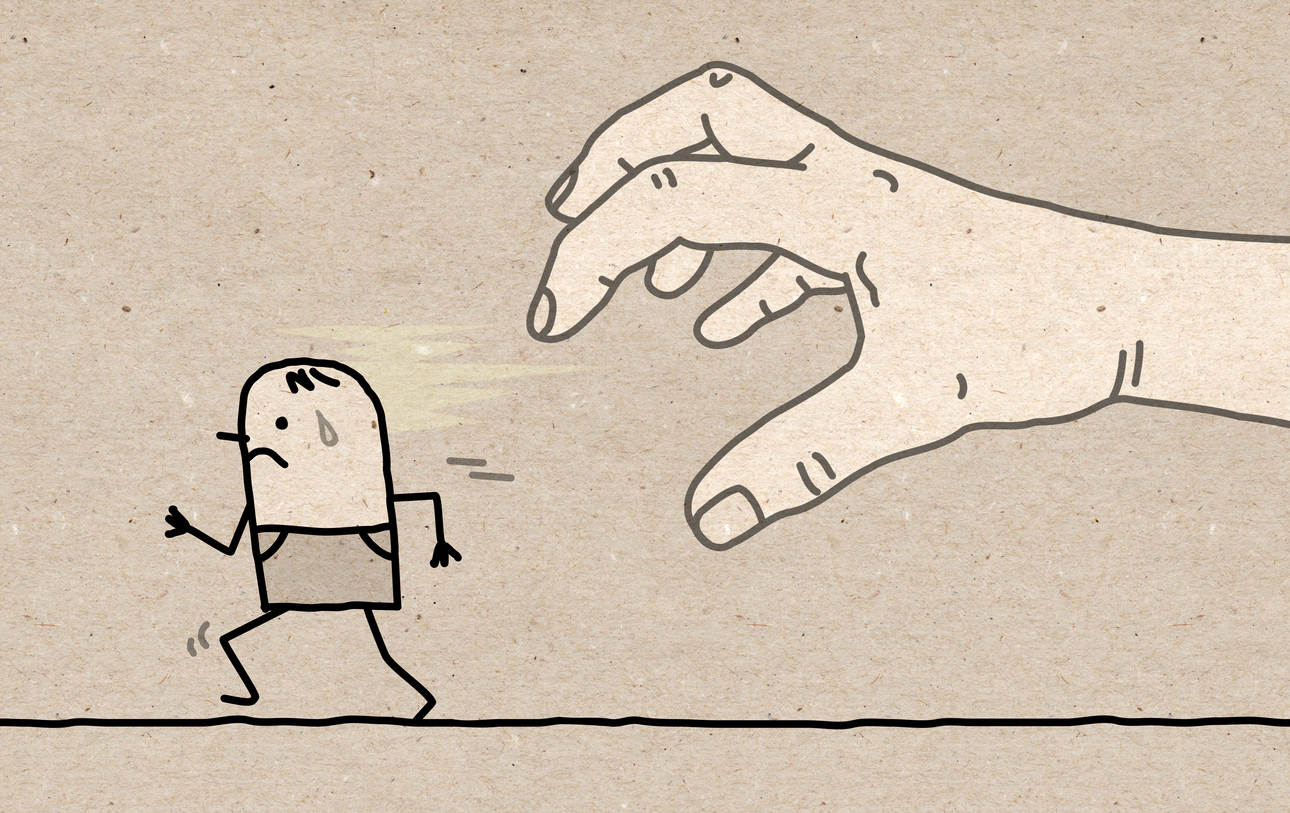
Bullying is real culprit!

Bullying is unwanted, aggressive behavior among school aged children or teenagers. The behavior is repeated, or has the potential to be repeated, over time. Children who are bullied and who bully others may have serious, lasting problems. Bullying can occur during or after school hours. While most reported bullying happens in the school. Bullying behaviors are repetitive or have the potential to happen more than once.

Bullying includes actions such as making threats, spreading rumors, attacking someone physically or verbally, and excluding someone from a group on purpose. When children experience bullying, they tend to become emotionally withdrawn. In cases where they were already quiet, shy and self-contained, they may become even more where they have problem interacting with their peers. Regular exposure to hurt, humiliation, and social isolation may cause them serious problems. Children may have trouble sleeping or eating, and may become unable to enjoy activities in school. Academic performance can be affected and they may start skipping classes or don’t have interest in studying. It is also important to note that anger and rage is one possible emotional response to bullying. Many reports following school shootings have found that the child shooters were bullied by their peers.

    Types of Bullying

  1. Verbal bullying: Saying or writing mean things. Verbal bullying includes:

    * Teasing

    * Name-calling

    * Inappropriate sexual comments

    * Taunting

    * Threatening to cause harm

  • Social bullying/Relational bullying: Involves hurting someone’s reputation or relationships. Social bullying includes:

    * Leaving someone out on purpose

    * Telling other children not to be friends with someone

    * Spreading rumors about someone

    * Embarrassing someone in public

  • Physical bullying: Involves hurting a person’s body or possessions. Physical bullying includes:

    * Hitting/kicking/pinching

    * Spitting

    * Tripping/pushing

    * Taking or breaking someone’s things

    * Making mean or rude hand gesture

  • Cyber Bullying: Cyber bullying can be covert bullying behaviors using digital technologies, instant messaging, internet chat rooms and other online platforms. They spread hurtful images and or messages harassing victims at all hour.
  • Sexual Bullying: It involves physical contact or sexually abusive inappropriate comments.

Bullying across culture

There are two types of culture, individualistic culture and collectivist culture. Individualistic culture focuses on “self”, it emphasizes on personal achievement and people are independent and autonomous. Social behavior tends to be dictated by attitudes and preferences of a person, for example, United States and Western Europe. In contrast, collectivist culture focuses on group goals, they place emphasizes on what is majority agreeing on and the peer pressure. The family and group goals are more important than one’s own needs or desires, for example, Japan, China, Pakistan, etc.

As the culture differs, so does people’s behaviors. There is difference seen in the bullying style among cultures. In individualistic culture, pecking order bullying is more common. This type of bullying is based on power hierarchy where the more powerful person bullies the less powerful. Typically, bullying in such cultures involves direct physical aggression and violence as one wants them to prove better than the other. Usually boys get involved more in such violent bullying as compared to girls. 

In collectivist culture, four-tiered structure is more common which comprises of victims, bullies, spectators and indifferent bystanders. Bullying often takes the form of relational aggression, that is, alienating a victim from his or her peers. There are more psychological scars rather than physical scars in such kind of bullying. Pecking order type of bullying is also seen in this culture but not as much as seen in individualistic culture. An example of pecking order bullying was shown in the highly popular Japanese cartoon known as Doraemon in which the character Gian is shown to be powerful and aggressive and he rules over the neighborhood kids with force.

The most common type of bullying throughout the world is name calling and teasing.

Cultural differences in self-defense

Individualistic culture comprises more of multi-ethnic society, that is, when many different races and cultures live together in one society. Due to multi-cultural society, the collective will of peer group is less powerful as they belong to different ethnicity having different believes. Here people are driven by social norms such as “Bullying is bad, and it must be stopped.” Therefore, in such societies children are more likely to stop bullying when encountered with such an event. Furthermore, victims are more likely to take revenge because they do not want to appear weak in such competitive environment and want to prove themselves as strong and independent.

However, in collectivist culture children learn the rules of peer pressure at an early age of development and see their elders following what the society is enforcing them to do rather than having an opinion of their own, hence this behavior is modeled because deviating from this might have grave consequences in such cultures. In these group oriented societies, children often stand passively when they witness bullying sensing the atmosphere of peers. The reaction given by victims here are shown in the form of mental disturbances such as depression, low attendances at school and even suicide in some cases.

Date with Psychosis!

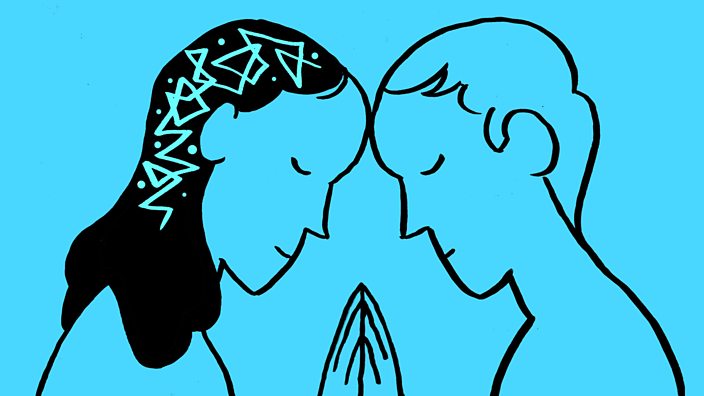
Psychosis is a medical disorder that affect the mind when there has been some loss of contact with  reality .Psychosis often begins when a person is in his or her late teens to mid-twenties .It can be a symptom of a mental illness or a physical condition or it can be caused by some medications, alcohol or drug abuse. According to a study Three out of 100 people will experience psychosis at some time in their lives. About 100,000 adolescents and young adults in the US experience first episode psychosis each year. Clinical features of psychosis include hallucinations (seeing, hearing, smelling, tasting or feeling something that is not real), paranoia, delusions (believing in something that is not real even when presented with facts) disordered thoughts and speech. Psychosis affects people from all walks of life. It is a common perception that a person with psychotic symptoms is dangerous. But in reality its not that simple .People experiencing psychosis may behave strangely, they may hear voices, or see things that don’t exist. They may be frightened and confused or withdrawn. However, it is more likely that these people will harm themselves than someone else. It is important to help a person with psychotic symptoms get treatment as quickly as possible. While the treatment strategies in past were very strange or inhumane today thanks to medical researches psychosis can be treated and early treatment increases the chance of a successful recovery. Studies have shown that it is common for a person to have psychotic symptoms for more than a year before receiving treatment. Reducing this duration of untreated psychosis is important because early treatment often means a better recovery. Research supports a variety of treatments for first episode psychosis, especially coordinated specialty care (CSC). It involves a multidisciplinary approach focusing on individual or group psychotherapy where cognitive behavioral therapy helps people solve their current problems. The CBT therapist helps the patient learn how to identify distorted or unhelpful thinking patterns, recognize and change inaccurate beliefs, relate to others in more positive ways, and change problematic behaviors. It’s also necessary to teach family members about psychosis, coping, communication, and problem-solving skills. Family members who are informed and involved are more prepared to help loved ones through the recovery process. Despite all these efforts psychiatric medications remain the mainstay of treatment for psychosis involving a variety of typical and atypical antipsychotics. These medications dumb down the brain and modify its activity in such a way that a person can participate in everyday routine of life. While they have such magical benefits they have their own risks as well therefore it is very important to have a multidisciplinary involvement of physicians. Last but not the least social support in employment and education is very necessary to help patients return to work or school and achieve their personal goals. It is very important for individuals with psychosis to be involved in their treatment planning. Their needs and goals should drive their individual treatment programs, which will help them stay engaged throughout the recovery process.

First step towards Personality Development

Man open eyes in this world and over time develops into a unique individual, performing role of a social animal. This leads to the concept of personality which is a relatively enduring pattern of thoughts, feelings and behaviors that distinguish individuals from one another. Uniqueness of these characteristics and patterns in a personality is partially due to unique set of genes that a person is born with and then eventually the wide range of environmental and social factors that shape the personality throughout the lifespan. Personality development is defined as a process of developing and enhancing one’s personality. Personality development helps an individual to gain confidence and high self-esteem. Personality development also is said to have a positive impact on one’s communication skills and the way he sees the world. Individuals tend to develop a positive attitude as a result of personality development. Personality development goes a long way in reducing stress and conflicts. It encourages individuals to look at the brighter sides of life and face even the worst situations with a smile. Nothing works better than a big smile when it comes to interacting with people around. A smiling face wins even the toughest soul. Smile not only helps in enhancing an individual’s personality but also winning other’s heart. While it is important to smile it is really essential to think positive as well. One should be a little flexible and always look at the broader perspectives of life. A healthy thought process can be supported only with a healthy body and a healthy body demands to dress sensibly. Dressing sensibly and smartly go a long way in honing one’s personality. One needs to dress according to the situation.  An individual who is well dressed is respected and liked by all. Just like a rose is nothing without fragrance an individual’s personality is nothing without kindness and compassion towards others. One should be soft spoken, avoid being rude and short tempered. Ego makes a personality rot. It stops evolution of thought process. Backbiting- Backstabbing and criticizing people are negative traits which work against an individual’s personality.  One must learn to appreciate others and do not always find faults in others.  An individual who is good from within is loved by all. Helping others is the final tool in personality development. When a person is involved in an act of kindness by helping a fellow being he explores new potential in life setting a cycle of positive changes in his personality. 

Panic Disorder or Ghost!

 Panic disorder affects 2 to 3% of people in the world per year, and it is twice as likely to occur in women as in men. Individuals with panic disorder tend to have sudden feeling of doom with their heart racing, skin flushing, extremities getting cold, air hunger and dizziness and they therefore become preoccupied with the fear that they may happen again, at any time. This condition can interfere with many aspects of the person’s life, causing them to avoid work or school and avoid situations wherein they fear a panic attack may occur. Many people with panic disorder are embarrassed or afraid to tell anyone about what they experience, instead distancing themselves from family and friends who could be supportive. Panic disorder is highly responsive to treatment. Building a toolbox of self-help strategies can be effective in helping you to manage your symptoms without living in fear. Here are few tips to cope up with panic disorder: The first step in overcoming your panic disorder symptoms is to understand what is happening in your body when you panic. Human body has different physiological responses one such response is the fight or flight response triggered by anxiety. Panic disorder results from misinterpreting sensations linked with the fight-or-flight response as dangerous, which triggers an uncomfortable and often frightening barrage of symptoms – also known as a panic attack. Once you understand what panic disorder is and why you are experiencing the symptoms, you can begin to learn to cope with them. The goal is not to eliminate the attacks, but to find a way to manage them without fear. Relaxation techniques can help to calm your body down, relax your muscles, and help you to think more rationally. Deep breathing technique helps to control the breathing rate and proves efficient to reduce air hunger in an attack. In order to gain control on muscles during an attack one must learn various deep muscle relaxing techniques that involve periodic tensing and relaxing muscle groups in body. All of these symptoms are caused by worrisome thought processes. In order to work on that it is necessary to challenge your fears. Graded exposure to worrisome situations helps reduce the anxiety around such situations. Making coping cards is a very effective method to overcome the panic. These cards include supportive

statements like this is a hassle not a horror, I’m falling into a thinking trap, I’ve confused a thought with a fact , people cannot tell that I’m anxious , it won’t last forever and I can handle this.

Psychiatric Facilities in Pakistan

Mental health disorders constitute a fair share of morbidity and mortality in our society. Depression and anxiety are the fastest growing diseases in the world. Psychosis, schizophrenia, mania and addiction are the most challenging disorders that demand scientific research. All around the world governments and societies are putting in money and resources for establishing facilities to deal with such disorders. Health has been a weak point for many previous governments in Pakistan. Sadly not much attention has been given so far to mental health as well. During their rule on subcontinent the British established a couple of institutions for mental health one in Lahore and the other in Sukkur. KPK government in their last term established an institute in Peshawar.  Apart from these there is not a single public sector institution available for millions of patients affected by these disorders. Most of these patients have to stay on medications for rest of their lives. If you get a chance to see the OPD of PIMH (Punjab institute of mental health) Lahore you will be amazed to see people coming all the way from Taunia , DG Khan, Tank , Dera Bugti , Skardu etc. just to get medications for their patients as many of psychiatric medications are not available in their areas. And this is just the tip of ice berg as far as problems are concerned. There is no concept of psychotherapy for most of the patients. No concept of family education least the rehab. The institutes which are available to the patients have a sadistic environment where even a normal person can get mad. The Govt. of Punjab has taken some steps to increase the no. Of doctors and facilities for the patients. And addiction treatment center is established in Lahore but no efforts have been made to modernize the treatment. Lahore despite being the hub of doctors in Punjab still has not a single professor of psychiatry in its largest institute of mental health. All the system is being run by diploma holders. Psychotherapy and psycho-education are the mainstay of treatment in psychiatric disorders in the whole world but it’s a luxury for patients in Pakistan only few can have. Where in the world an institute of 1500 patients can be managed by only 7 psychologists. The government needs to take concrete steps to induct fresh blood of psychologists in these institutions. There are only 2 psychiatrists in 22 districts outside Lahore of Punjab. New institutions need to build in order to decrease the load on health facilities of Punjab. 

Mania-a puzzle!

Mania, a quite familiar yet not widely known term refers to a psychological state of over activity and liability known to cause a great many physiological effects on body mind and soul. It affects the societal interactions and vice versa. Like schizophrenia it has genetic predispositions too. It has been found in various researches that sex-linked genetic transmissions, the kind in which affected genes are on short arm of X-chromosomes of females, occurs in families having maniac depression type disorders. While this genetic component is just one strand in the transmission of this disease, on societal level it has a great many influences which remain major shareholders for ever increasing load of this disorder causing an ever evolving directions of ongoing research. One such research finds out that family emphasis on achievement and highly ambitious extrinsic goals were associated with these mania- relevant cognition. Technology has done great part in fast tracking life. With invent of social media one is connected with whole world sitting on couch. One sees the world with multiple perspectives and gets lost in it losing track of time .All of this information is reshaping our ambitions and whether we know it or not we are subconsciously competing with the whole world. Family structures reshaping with the new tools and gadgets, money has taken place over empathy are all the challenges that this modern world faces for the psychological well being of society. Drugs are another area that needs to be focused. Drugs act as fertilizers for the growth of psychosis and mania. On the background of hypo manic states drugs cultivate the seeds of delusions and paranoia. A maniac is always attracted to new ways to expose his mind to this leads to a great propensity for addiction. Society needs to work as a unit to stop the influx of drugs in schools and colleges in order to stop the drugs from reaching the hands of teenagers. Families having members suffering from this disorder need to have special support groups where they can learn the ways to smooth-en their problems with maniac patients. They need to have a better understanding of the environmental factors involved in this disorder. They need to develop ways to cater such patients in ways that are favorable for both the subject and the whole. Having a crisis plan is very important so that everyone is aware of the dangers and roles they have to take to handle the situation if the patient becomes unwell or aggressive. 

An interactive workshop on Panic and anxiety

Madadgaar is an organization which aims to bring tolerance and acceptance towards mental health problems. To help people we need to educate them first on this sensitive topic. Awareness about problem make people think about solutions. So Madadgaar team decided to conduct first workshop on panic attack and anxiety. We have chosen this topic to address because prevalence of anxiety and panic attack disorder range between 7%-50% in different cities of Pakistan. Women are most likely to experience the condition and it most commonly occurs when a person in early adulthood, from ages 18 to 25 years. Hence it’s need of time to invite people on open discussion and educate them properly.

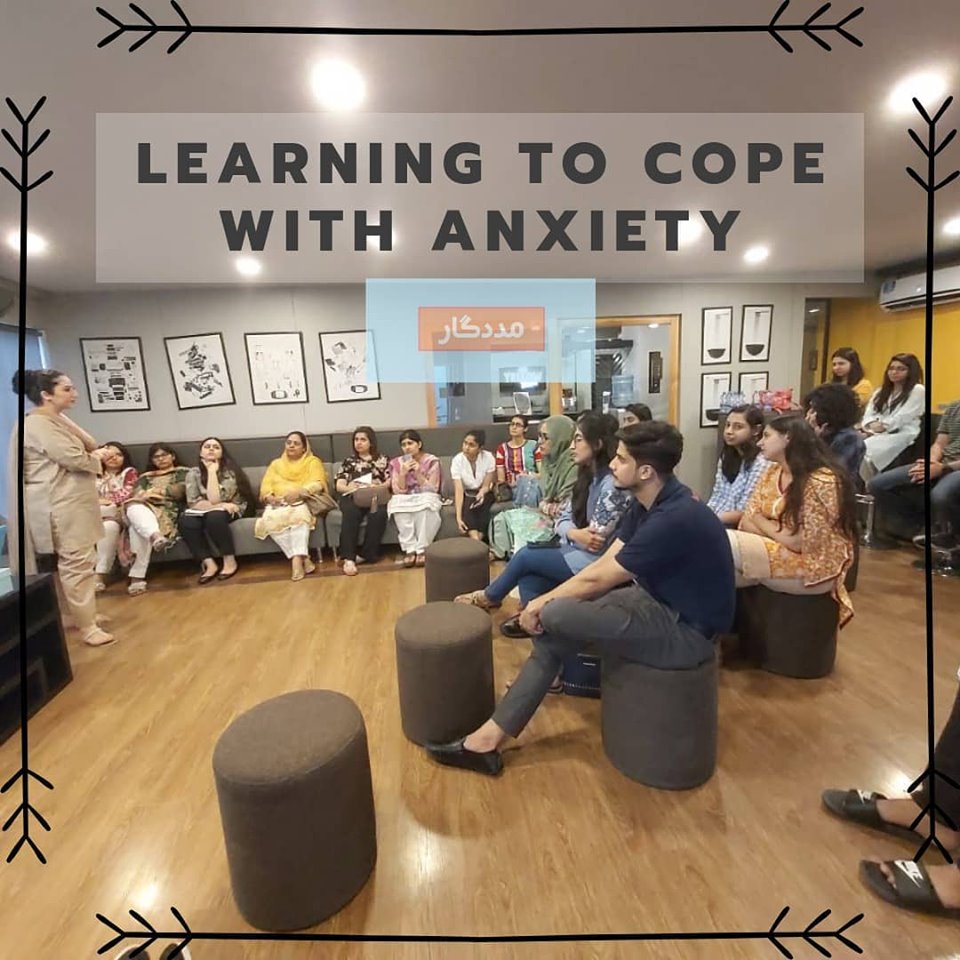
Our team decided the date 9th July, 2019 for our workshop. Our guest speaker was Fatima Abbas, who is gold medalist in MS clinical and counselling Psychology. She is working as consultant clinical psychologist. The venue we chosen was Daftarkhwan office DHA. The atmosphere over there is very calm and offers interactive environment for such workshop. People from all walks of life registered for the session already and we were overwhelmed by response of people. Then we realized that how badly people need such platforms where mental help sessions are provided.

Our speaker Fatima Abbas started talking about anxiety and its symptoms in detail:    Palpitations, pounding heart, or accelerated heart rate, sweating, trembling or shaking, sensations of shortness of breath or smothering, feelings of choking, chest pain or discomfort, nausea or abdominal distress, feeling dizzy, unsteady, light-headed, or faint, chills or heat sensations etc.

During it people asked relevant questions and conveyed their individual concerns to find their answers. Fatima Abbas was very patient towards them. She spoke about how panic sets in, how can we calm ourselves, how can we be relieved. She enlighten the difference between depression and anxiety as well.

Picture taken from anxiety workshop session.

 We learned how to cope up with our worries and anxieties. At the end she talked about preventive measures and solutions. Relaxation exercise was also practiced under her supervision. Every one of us got a chance to speak up without fear of being judged. Coping mechanism were discussed as well.

At the end Madadgaar team gave donation box which was kind of mood indicator. It had two moods happy and sad. People were told to donate if they want to, in any of the part according to the way they feel after workshop.

Successful workshop enhanced our passion towards spreading awareness regarding mental health problems. It was Madadgaar’s first step towards our dream stigma free Pakistan as journey of thousand miles begins with only one step.

Depression

Depression is a mood disorder characterized by persistently low mood and a feeling of sadness and loss of interest. It is a persistent problem, not a passing one, lasting on average 6 to 8 months.

There different types of depression which include:

  • Uni-polar
  • Bipolar
  • Major depressive disorder

If the predominant feature is a depressed mood, it is called unipolar depression. However, if it is characterized by both manic and depressive episodes separated by periods of normal mood, it is referred to as bipolar disorder (previously called manic depression). Major depressive disorder is characterized by depression accompanied by psychosis. Psychosis can involve delusions – false beliefs and detachment from reality, or hallucinations – sensing things that do not exist.

Symptoms of depression can include:

  • depressed mood
  • reduced interest or pleasure in activities previously enjoyed, loss of sexual desire
  • unintentional weight loss (without dieting) or low appetite
  • insomnia (difficulty sleeping) or hypersomnia (excessive sleeping)
  • psycho-motor agitation, for example, restlessness, pacing up and down
  • delayed psycho-motor skills, for example, slowed movement and speech
  • fatigue or loss of energy
  • feelings of worthlessness or guilt
  • impaired ability to think, concentrate, or make decisions
  • recurrent thoughts of death or suicide, or attempt at suicide

The causes of depression are not fully understood and may not be down to a single source. Depression is likely to be due to a complex combination of factors that include:

  • genetics
  • biological – changes in neurotransmitter levels
  • environmental
  • psychological and social (psycho-social)

Depression is among the most treatable of mental disorders. Between 80 per cent and 90 per cent of people with depression eventually respond well to treatment. Almost all patients gain some relief from their symptoms.

Medication: Brain chemistry may contribute to an individual’s depression and may factor into their treatment. For this reason, antidepressants might be prescribed to help modify one’s brain chemistry. These medications are not sedatives, “uppers” or tranquilizers. They are not habit-forming. Generally antidepressant medications have no stimulating effect on people not experiencing depression.

Psychotherapy: Psychotherapy, or “talk therapy,” is sometimes used alone for treatment of mild depression; for moderate to severe depression, psychotherapy is often used in along with antidepressant medications. Cognitive behavioral therapy (CBT) has been found to be effective in treating depression. CBT is a form of therapy focused on the present and problem solving. CBT helps a person to recognize distorted thinking and then change behaviors and thinking.

Electroconvulsive Therapy (ECT) is a medical treatment most commonly used for patients with severe major depression or bipolar disorder who have not responded to other treatments. It involves a brief electrical stimulation of the brain while the patient is under anesthesia. A patient typically receives ECT two to three times a week for a total of six to 12 treatments.

Anxiety

I’m sure you all are aware of the very common word, especially popular among millennial, that is ANXIETY! Damn did this made you feel something in your tummy or did you remember the last time your heart racing? I’m sure you do but anxiety is much more than just that. First of all let me shatter the false belief that you’ve got to get rid of your anxiety always because anxiety isn’t irrational in itself. Instead you’ll be flabbergasted to know that anxiety exists in every human being and it acts as a motivating drive for us to act on to different things that is out of one’s comfort zone. However, the only time anxiety becomes debilitating is when it takes over you and completely engulfs you. The amount of anxiety you feel depicts whether it is rational or irrational.

The American Psychological Association (APA) defines anxiety as “an emotion characterized by feelings of tension, worried thoughts and physical changes like increased blood pressure. Anxiety disorders alter how a person processes emotions and behave, also causing physical symptoms. Mild anxiety might be vague and unsettling, while severe anxiety may seriously affect day-to-day living.

Causes There could be different reasons of different people who are experiencing anxiety. Some of the common reasons include:

 Genetics

 Environmental stressors

Medical factors

Biochemistry (imbalance of hormones or neurotransmitters)

 Withdrawal from a substance

Symptoms

The common symptoms of anxiety are listed below:

 1) Uncontrollable feelings of worry and nervousness

2) Restlessness

 3) Increased irritability

 4) Difficulty concentrating

5) Disturbed sleeping pattern such as problems in falling or staying asleep

6) Having an increased heart rate

 7) Breathing rapidly (hyperventilation)

8) Sweating

Types

  1. Generalized anxiety disorder

This is a chronic disorder involving excessive, long-lasting anxiety and worries about nonspecific life events, objects, and situations. GAD is the most common anxiety disorder, and people with

The disorder are not always able to identify the cause of their anxiety.

2) Social anxiety disorder

This is a fear of negative judgment from others in social situations or of public embarrassment. Social anxiety disorder includes a range of feelings, such as stage fright, a fear of intimacy, and anxiety around humiliation and rejection. This disorder can cause people to avoid public situations and human contact to the point that everyday living is rendered extremely difficult

3) Separation anxiety disorder

High levels of anxiety after separation from a person or place that provides feelings of security or safety characterize separation anxiety disorder. Separation might sometimes result in panic symptoms.

4) Substance Induced anxiety disorder

Characterized by symptoms of intense anxiety or panic that are a direct result of misusing drugs, taking medications, being exposed to a toxic substance or withdrawal from drugs.

Don’t Believe Everything You Think

People are disturbed not by things but by the views they take of them. Our thoughts can often deceive us. So how can we tell which thoughts to believe and which to ignore?

 Albert Ellis, the founder of Rational Emotive Behavioral Therapy or REBT believed that all feelings are natural, but some are healthier than others. REBT is about helping people make profound philosophical changes.

One part of his theory suggests that there are certain beliefs that help us get closer to our goals and are self-serving. They termed such beliefs as rational beliefs.

On the other hand, the beliefs that hinder us from living our best life are called irrational beliefs. Such beliefs are usually formed in early childhood and are usually a result of socially constructed norms. Research has shown that these beliefs prevail across cultures. Let’s think of these beliefs as small voices in our head. These voices distort our reality. Don’t believe everything they whisper in your ear.

The first voice says: “You failed to do this one thing. That means you are a total failure!”

This voice has many rigid and absolutist demands. Our thoughts are subject to the Tyranny of the Shoulds. There are certain musts, oughts, and should that govern our world. It usually starts off as a preference that gradually increases in intensity until we feel that it has become a need. Sometimes our need to control our circumstances our even the need to control ourselves can lead to emotional disturbance. We can mistake preferences for dire needs. But instead we can say that I would have likes this situation to turn out a certain way but it’s okay if it didn’t.

The second voice says: “I can’t stand it! I can’t tolerate this!”

This voice has no tolerance for uncomfortable or unfavorable situations. If you try to bend it; it will break. We can try to reason with this voice and tell it that sometimes things don’t go our way and that is a part of life. This is not to say that we should tolerate abusive relationships and unfair circumstances. We simply want to try to objectively evaluate our situations and learn to choose our battles.

The third voice says: “I will not accept myself/others/ my life if xyz things are not there”

Our culture has indoctrinated us with the belief that making mistakes is not excusable. We are quick to shame and judge each other for the occasional spilled chai or broken plate. What we often forget is that human beings are far from perfect. We should embrace our mistakes. For human beings are messy creatures. There is nothing wrong with that.

And the fourth (last voice) simply says: “This … is … AWFUL!”

Place the situation on a continuum that reflects its intensity in relation to other situations that you have been in in the past. Is it really the worst day of our life? We are not invalidating your feelings. It could possibly be the worst day of your life. But even then you know that it has never been worse than this.

REBT says that we should practice changing our beliefs and explore new attitudes outside moments of stress. Our reality is subjective. Doesn’t that indicate that we have the power to mold our reality into one that is more beneficial for us? People have a natural ability to change themselves, but REBT actively-defectively tries to help them do so in collaboration with an involved therapist.